
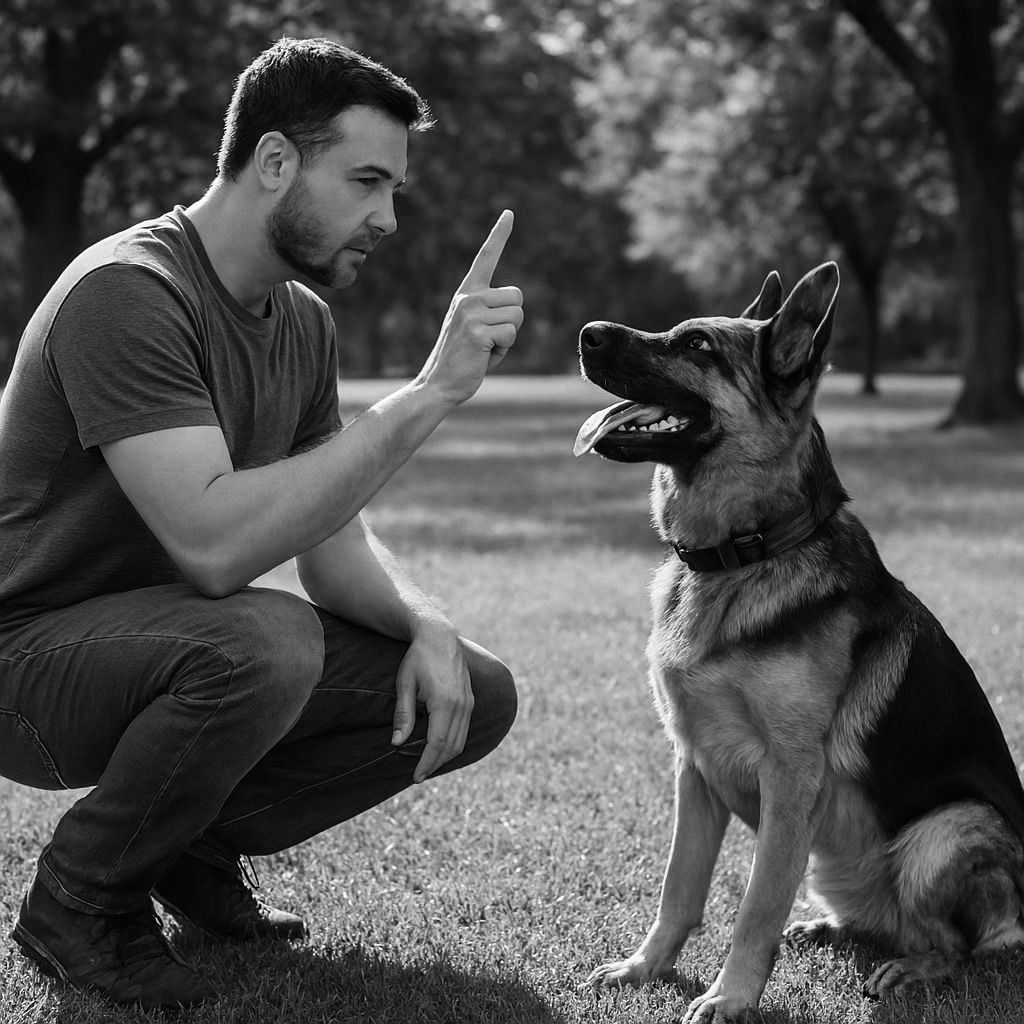
“notice the attention the dog gives the man”
Hi, I’m Jason C. Owen, and I’ve been hooked on dog handling for over 20 years now. I call it “the game”—and once you learn it, you’ll never look at training the same way again. There’s nothing like giving a command and watching your dog respond instantly, like you’re speaking the same language. That moment? That connection? That’s the magic. That’s “the game.” And I fell in love with it the first time I saw it happen.
Training a dog is one of the oldest human practices—an art passed down through generations. Whether you’re working with a hunting dog or a family pet, the foundation of effective training is always the same: consistency and patience.
🐾 Starting with “Sit”: The First Command
The “sit” command is often the first and most essential behavior to teach. It helps establish attention and sets the tone for future training. Start with treats in your pocket. Say “sit,” and when your dog complies, reward immediately. Most dogs pick this up quickly. Once the behavior is learned, begin enforcing it without treats—just praise and consistency.
🗣️ Teaching “Here”: Recall and Safety
The “here” command is critical for recall, especially when your dog is headed toward danger or simply distracted. Use a long lead rope to practice. Walk away from your dog, then give a quick “pop” on the rope while saying “here.” A pop is a short, sharp tug—not a pull—and is meant to get the dog’s attention without causing discomfort. Repeat: “pop-pop, here-here,” and guide the dog back to you. Practice makes handling the rope easier over time.
🚶♂️ “Heel”: Teaching Manners and Control
“Heel” is a manners-based command, especially useful in hunting or crowded environments. It means your dog should walk calmly beside you, usually on the right side. Use a heel stick—not for punishment, but as a gentle tap on the chest while saying “heel.” Always use a leash or lead rope during this training. Keep your commands short and end each session on a positive note.
🛏️ “Place”: Calm and Control
The “place” command tells your dog to go to a designated spot—like a mat, bed, or carpet—and stay there. It’s especially helpful when guests arrive or during mealtime. Like “sit,” it’s a manners command that promotes calm behavior and control. So make your dog sit and point to the ground. He’s following your treat rally and will lay down. If he don’t give him a little nudge to guid him.
⚡ Using an E-Collar Responsibly
Electric collars (e-collars) can be effective tools when used correctly. Never use them out of frustration. First, condition your dog by placing the collar on without turning it on. Pair it with a choker chain for initial training. Use the “here” command with a leash pop to get your dog used to the sensation.
Once your dog is comfortable, set the e-collar to the lowest level. With one hand on the leash and the other on the remote, say “here,” pop the leash, and give a gentle “nick” (a brief signal from the collar). This helps the dog associate the nick with your command. Always read the equipment manual thoroughly.
Important: Test the collar on yourself before using it on your dog. Misuse can cause fear, trauma, or injury. The goal is communication—not punishment.
🐶 Naming Your Dog: One Syllable Matters
A dog’s name is a command in itself. Choose a name with a single syllable for clarity and quick recognition. For example, my dog’s name is “Deek.” Avoid excessive talking during training—it can confuse your dog. Stick to clear, consistent commands.
🧠 Final Thoughts: No Perfect Dogs, Just Better Relationships
Training isn’t about perfection—it’s about connection. Whether your dog is learning “sit,” “here,” “heel,” or “place,” the key is consistency, patience, and having fun. A well-trained dog isn’t just obedient—they’re a joy to be around.
I can’t express myself more. Have fun, and always be consistent. Don’t tell to your dog. I trained a dog once his name was Mr Bo Jingles. After I was done his new name was simply Bo. Thanks for taking your time, being patient, and have fun.
If you’re interested in advanced commands like “fetch,” “over,” or “hold,” feel free to reach out. I’d be happy to share more.
if you enjoyed this feel free to subscribe and message me with any questions. —jason
© 2025 Jason C. Owen / www.a-writers-life.com. All Rights Reserved.
All content, including written works, images, and original concepts, is the intellectual property of Jason C. Owen.Unauthorized use, reproduction, or distribution of any material from this site is strictly prohibited without express written consent.
6 responses to ““The Game” Dog obedience training”
You do this too? You are a man of many talents or Jack of all trades 😋.
But this is great information… little girl is ‘trying’ to train our cat 😆…
Should work just fine
What, the training? I doubt our cat would learn anything now.
Cats are smart—no doubt about it. The key is consistency. You’ve got to be clear about what you want them to do, teach it to them, and once they’ve learned it, stick to it. That’s the trick: figure out the behavior, guide them through it, and then follow through every time.
I have to teach my daughter first so she can train the cat 😆.
They are very smart but my furbaby loves his sleep and snuggles next to me. He likes to scratch my little one…but I’ll tell her to keep training him.
Haha, I know exactly what you mean. The cats are definitely in charge of their own training, and the snuggles are non-negotiable. Good luck to your daughter with the mission! Sounds like a worthy challenge.
Thanks for this, Iba.